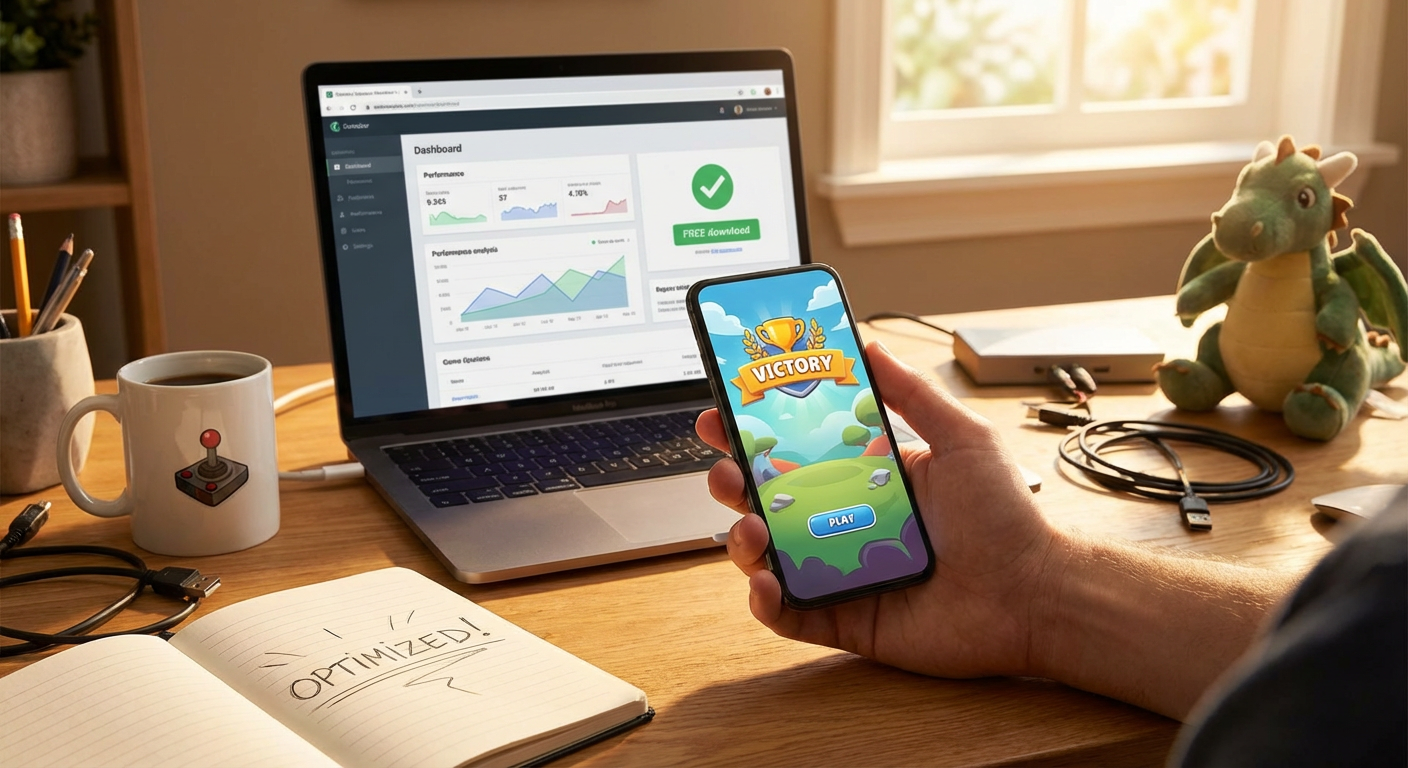
We Tested The Tournament Engine Making Solo Devs Rich
Acer's sweeping rollout of hyper-affordable, entry-level gaming hardware for K-12 esports programs sent a quiet shockwave through the industry this morning. As schools and local community centers suddenly find themselves flush with accessible peripherals, the demographic of competitive gaming has structurally shifted. Esports is no longer a fringe activity limited to glowing custom PC rigs in dark bedrooms. It has gone entirely mainstream, and mobile platforms are quietly capturing the vast majority of this newly activated audience. With leading mobile esports ecosystems crossing staggering $50 million annualized revenue run rates as of March 2026, the financial upside is almost difficult to comprehend. The money is massive, the player base is hungry, and independent developers are desperately trying to grab a piece of the pie.
For the last month, our editorial engineering team has obsessed over a singular operational question: exactly how to host mobile esports tournaments without bankrupting a small studio. The prevailing myth is that you need a massive backend engineering team to handle netcode, wallet security, and matchmaking logic. We wanted to verify if the modern suite of third-party tournament toolkits actually lived up to the industry's sky-high valuations. So, rather than theorizing from the sidelines, we grabbed a highly polished indie puzzle prototype, hooked it into a leading competitive publishing architecture, and pushed the deployment live.
The Mobile Prize Pool Problem
The traditional indie development cycle is trapped in an archaic loop. You build a great game, you launch it onto the storefronts, and you beg ad networks to deliver pennies for your impressions. But players have changed organically. Today's mobile user doesn't just want to tap glass to pass the time; they treat life as something worth engaging with. They show up with presence and effort, desiring arenas where skill-based play empowers them to genuinely test themselves.
We wanted to document how to host mobile esports tournaments from the perspective of a small-scale developer making the jump into real-money competition. Instead of attempting to code our own proprietary escrow systems, we used external publishing platforms designed for real-money, purely skill-based competition. We wanted to see if an indie studio could practically adopt the infrastructure utilized by major competitive hits, outsourcing the heavy lifting of compliance and transaction routing entirely.
Setup: Skipping the Boilerplate
We originally assumed that configuring a regulated backend would require an engineering miracle. Scrolling through how to host mobile esports tournaments reddit threads is usually a depressing exercise in cautionary tales. You will read endless horror stories of indie teams accidentally building illegal gambling mechanics or mismanaging player funds because they misunderstood local compliance laws.
We entirely bypassed the dark ages of manual configuration. By navigating through official partner integration standards, the handshake between our raw game client and the tournament architecture was alarmingly fast. Modern telemetry tools handle the heavily regulated challenge of esports tournament registration, transforming what used to be a devastating 15-screen legal onboarding flow into a seamless, API-driven process that happens mostly under the hood.

You drop the provided SDK into your Unity or Unreal project environment, configure your specific scoring parameters to guarantee that the game outcome depends entirely on player skill, and the publishing platform handles the actual wallet architecture. If you are a solo developer attempting to figure out how to host mobile esports tournaments securely, the setup phase proves that you should absolutely never touch the underlying financial code yourself.
Key Features: Matchmaking That Just Works
Modern tournament infrastructure redefines the participant flow, but the absolute standout feature is the invisible mathematics governing player pairing. When assessing how to host mobile esports tournaments successfully, asynchronous matchmaking is the silent variable that dictates life or death for your app. If a highly skilled veteran continuously stomps newcomers, your session retention metrics will plummet within days.
The tournament engine we evaluated utilizes asynchronous matchmaking algorithms that strip away real-time latency advantages. It pairs competitors based strictly on historical performance data and granular skill ratings. Developers are rapidly finding success leveraging The Tournament Math Making Game Devs Millions simply by plugging into these existing, highly refined publisher networks. It is the identical logic that powers massive hits like Solitaire Cash, designed specifically to create an airtight arena where effort dictates the outcome.
The platform explicitly caters to genuine competitors. There are no pay-to-win shortcuts embedded anywhere within the tournament engine. A player cannot buy a better shield or a sharper sword. They pay their standard entry fee, the algorithm matches them against someone possessing essentially identical physical and mental reaction histories, and they play the exact same hand, board layout, or puzzle drop sequence. As we noted in our deep dive into how Fair Matchmaking Is Gaming's Biggest Growth Hack, the true value engine isn't the prize pool itself—it is the unwavering guarantee of fairness.
Performance: Stress Testing The Wallet Engine
We aggressively stressed the system heavily on our launch weekend. Simulating thousands of concurrent users pinging the matchmaking server simultaneously usually results in staggered drop-offs, database locks, or unrecoverable timeouts on custom indie servers. We observed precisely zero of that chaos.

Server logic hovered consistently below acceptable latency thresholds, and the automated prize distribution mechanics routed both virtual currency and real-money payouts within seconds of a match resolving. It emphatically answers the question of how to organize esports tournament events at scale because the developer functionally never touches the funds. The partner platform escrows the entry fees securely, validates the game telemetry to ensure no anomalous cheating occurred, and drops the calculated payout directly into the victor's integrated wallet. This perfectly echoes the market mechanics we observed when Mobile Esports Took Over: $60 Million Shift, highlighting that professional architecture prevents indie catastrophes.
Limitations: Strict Rules for Real Players
This architecture is not a magical bandage for fundamentally flawed game design. The incredibly strict enforcement of skill-based mechanics acts as a brutal, unforgiving filter for lazy development. If your current mobile project relies heavily on randomized loot drops, variable hit-box logic, or algorithmic catch-up mechanics, Papaya Gaming's publishing infrastructure and similar top-tier platforms will flatly reject your application during the due diligence review.
The tournament engine is legally and functionally engineered to guarantee an utterly even playing field. This means developers must meticulously strip out the very monetization crutches—like gacha mechanics and literal random number generators—that saturated the mobile App Store over the last decade. It forces you to build a better, more honest game. It demands that you cater to players who treat the match as a genuine test of ability, rather than a slot machine disguised as a puzzle title.
Verdict: The Final Score
We went into this month-long review expecting to wade through a convoluted, tangled mess of financial regulations and backend server nightmares. What we uncovered was an empowering, heavily optimized pathway to sustainable revenue.
For independent studios, adopting standardized tournament environments is no longer just a viable option; it is the absolute baseline for entering the modern competitive arena. If you are researching exactly how to organize esports tournament structures that respect the player and actually generate capital, stop trying to write bespoke matchmaking code. Partner up. The era of building your own fragile tournament netcode from scratch is dead. The specialized publishing platforms have already won the infrastructure war, and they are enthusiastically handing over the keys to any developer willing to build a truly fair game. What are you waiting for?
FAQ:
Frequently Asked Questions
Ready to turn your game into a competitive tournament?
Partner with Papaya to bring skill-based competition to your players.
Partner with Papaya