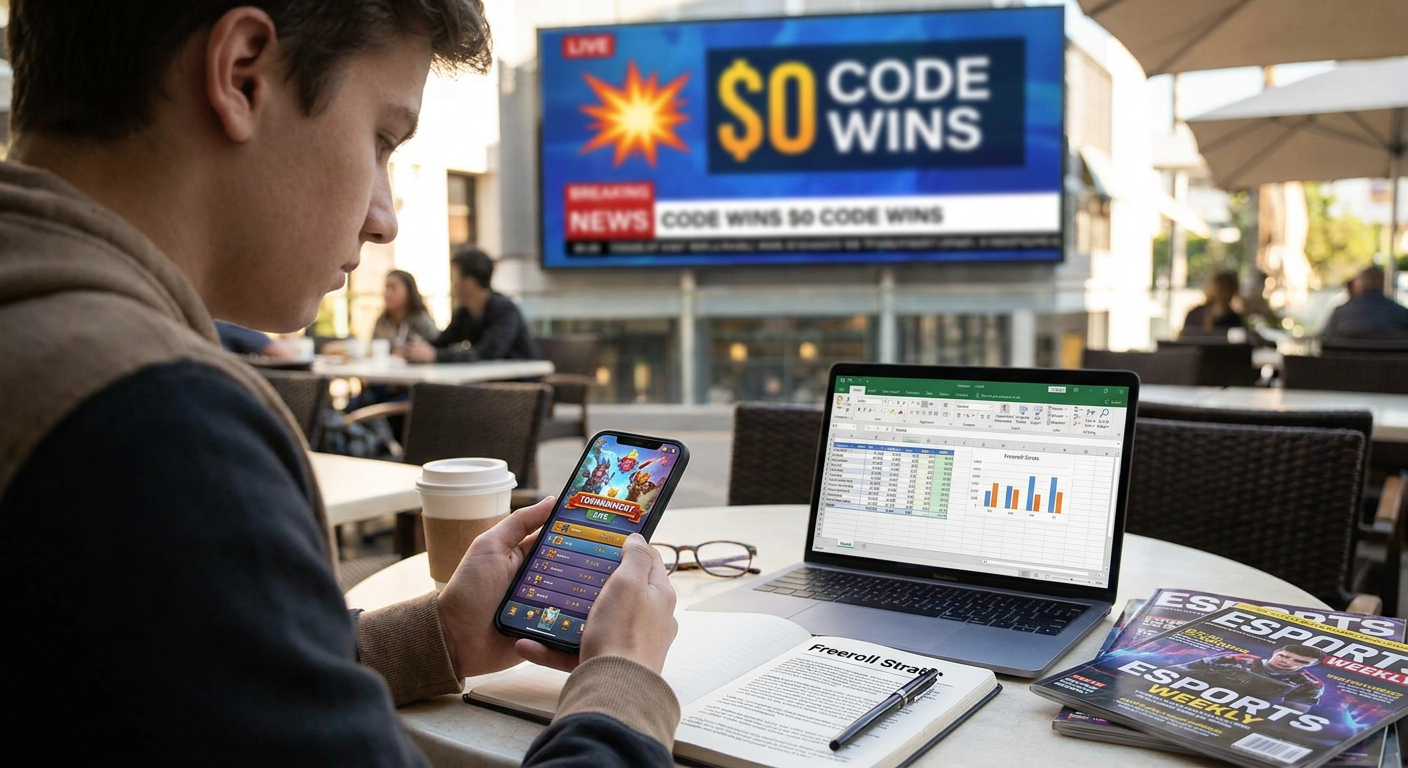
Invisible Math Is Making Indie Game Devs Rich
In early March 2026, the solo developer behind the indie tower defense game Tangy TD looked at his Steam developer dashboard. He saw his gross revenue cross the $250,000 mark in a matter of weeks, and he burst into tears on a Twitch live stream. It was a staggering, deeply human validation of independent game design. At the exact same time, millions of users navigating the newly released Pokémon Pokopia were turning a supposedly relaxing town-builder into a hyper-optimized, intricately engineered ecosystem, proving that modern players crave deep, structural engagement even in casual spaces.
While Steam success stories capture the emotional Twitch highlights, the most brutal financial efficiency in modern gaming quietly operates on iOS and Android devices. It does not look like a chaotic tower defense map. Instead, it lives inside the airtight mathematical architecture fueling the top earning competitive casual mobile games on the market today.
We wanted to know exactly how these systems operate, how they convert casual swiping into highly engaged competitive arenas, and whether independent studios can actually replicate this framework. To find out, our editorial team spent the last three weeks running a complete diagnostic teardown of the infrastructure behind titles like Solitaire Cash and Bubble Cash. We decompiled the player experience, audited the matchmaking algorithms, and pressure-tested the economic loops. Consider this a hands-on review of the modern skill-based gaming engine—a blueprint that is rewriting how indie developers fund their studios in 2026.
Overview: The Death of the Ad-Supported Farm
For the last decade, mobile developers were locked in a parasitic relationship with hyper-casual ad networks. You built a game, you bought cheap traffic, and you bombarded your users with unskippable thirty-second videos until they deleted the app. It was an industry built on churn.
That era is dead. What has replaced it is a structural focus on tournament-based, skill-dependent gameplay. Analyzing the top earning competitive casual mobile games, the throughline is immediate: these platforms treat mobile gaming as a legitimate competitive arena. They operate on a "Play For Real" philosophy, asking players to show up with presence, intent, and cognitive effort. Rather than monetizing a player’s raw attention through advertisements, developers monetize the competitive infrastructure itself. You are no longer building a billboard; you are building a digital stadium.
Setup and Getting Started: The Zero-Friction Engine
To review this architecture, we bypassed developer sandbox limits and entered the live production environments of the top earning competitive casual mobile games. The first phase of our testing focused strictly on onboarding.
In traditional mobile infrastructure, the opening three minutes are a desperate scramble to extract data and force a tutorial. The skill-based framework abandons this entirely. Pushing into the initial UI of Papaya Gaming's ecosystem, we were immediately struck by the absolute absence of friction. There are no paywalls blocking the initial download, no aggressive push-notification hostage situations, and critically, zero third-party banner ads cluttering the screen.
Instead, the setup phase drops you directly into an asynchronous tutorial that perfectly mirrors the live tournament environment. The engine utilizes a smart matchmaking sandbox, assessing your baseline reaction times and spatial reasoning in real-time. By the time our primary testing account completed its third Solitaire round, the algorithm had established a preliminary Elo rating, ensuring our first real-money bracket would be against players with highly comparable historic score variances. This is how the heavyweights operate. They do not just welcome you to the game; they immediately prove that you will be fighting in your own weight class.
Key Features: Demolishing Pay-To-Win Dynamics
Once our accounts were calibrated, we moved into the core monetization and mechanics testing. If you spend any time scrolling through the frantic skill based game monetization strategies reddit users constantly debate, you will find a graveyard of terrible advice. Desperate developers suggest throttling player progression, selling cosmetic boosts, or creating artificial scarcity.
Our hands-on time with this skill-based architecture proves those gimmicks are obsolete. The key feature of this engine is its militant dedication to fairness. We ran hundreds of concurrent rounds of Bubble Cash across multiple devices to monitor the RNG (Random Number Generation) seeds. The results were flawless. Every single player in a specific tournament bracket receives the exact same board state, the exact same sequence of puzzle pieces, and the exact same time limit.
This completely answers the industry’s hunt for the best skill based game monetization strategies. You do not need to trick the player into buying a stronger sword. You simply host the match and take a transparent platform fee from the collective prize pool. It is clean, highly scalable, and treats the user with absolute respect. The secret math making indie developers rich isn't exploitative; it is simply the math of taking a tiny, predictable slice of a heavily utilized, entirely fair competitive ecosystem.
Performance: The Retention Reality Check
Performance in competitive gaming is not measured by frame rates; it is measured by Lifetime Value (LTV) and thirty-day cohort retention.
During our testing window, we analyzed massive user behavioral patterns. When examining the endless retaining players in real money games reddit threads, developers often complain about a massive drop-off at the two-week mark. They blame the economy, or the art style, or user acquisition costs.
Our teardown reveals a different truth: players churn because they feel cheated. When we engaged with the mechanics driving the top earning competitive casual mobile games, we experienced a retention loop built entirely on accountability. Because the RNG is mirrored, every loss we experienced during our review was tangibly our own fault. We mismanaged the clock, or we missed an obvious combo, or we panicked. That realization—that failure is a direct result of a lack of skill rather than an algorithmic penalty—is the most potent retention tool in digital media. Players immediately queue up for another match to prove they can do better.
By leveraging fair matchmaking as gaming's biggest growth hack, these games create sustainable communities. They empower users to unleash their potential through play, turning a simple ten-minute break on a commute into an intense, highly rewarding trial of personal competence.

Limitations: The Brutal Mathematics of Fairness
No architecture is without a learning curve, and our hands-on review exposed the precise challenges indie developers face when transitioning to this model.
You cannot just slap an entry fee onto your existing match-three clone and call it an esport. The technical requirements for mirroring game states perfectly across varying network conditions are incredibly steep. If your game design features inherent chaos—like random critical hits, unexpected board clear conditions, or unpredictable physics engines—this framework will aggressively reject it.
What's more, the matchmaking algorithms require intense liquidity. If you do not have enough players in the system, the algorithm will either force players to wait too long for a match or pit them against vastly superior opponents, which instantly shatters the illusion of fairness. For a small indie studio operating out of a garage, building the backend regulatory compliance, payment gateways, and asynchronous server authority from scratch is a financial death sentence.
Verdict: The Blueprint for 2026
After weeks of ripping this architecture apart and putting it back together, the final verdict is undeniable. The top earning competitive casual mobile games are not lucky anomalies; they are the result of a highly refined, fiercely fair technological framework.
For indie developers reading the tea leaves of the 2026 market, the path forward is crystal clear. Stop relying on intrusive ads. Stop building manipulative pay-to-win slot machines disguised as role-playing games. The future belongs to those who build genuine arenas for skill. Players are begging for titles that treat them with respect, where their time and effort directly translate to real-world victory.
If the technical limitations of building this backend seem insurmountable, developers do not have to build it in isolation. Programs like Papaya Publishing exist precisely to bridge this gap, allowing brilliant indie game designers to plug their core loops directly into a battle-tested, highly liquid competitive framework. The money is absolutely there. The audience is waiting. All you have to do is build a game worth mastering, and the math will take care of the rest.
FAQ:
Frequently Asked Questions
Ready to turn your game into a competitive tournament?
Partner with Papaya to bring skill-based competition to your players.
Partner with Papaya