Algorithm Turns Puzzles Into Millions
Last Friday morning, over three million people found themselves staring intensely at a staggering "double diagonal" grid in The New York Times. It was a late-week beast expertly crafted by Katie Hoody, and it practically commanded absolute silence from anyone trying to solve it. But while the traditional crossword puzzle remains a solitary endeavor, the surrounding mobile gaming scene is undergoing a violent, thrilling evolution. Quiet, solitary logic is no longer enough. The market demands a fight.
Everywhere in early 2026, the walls of the single-player puzzle are collapsing. SYBO just integrated a permanent competitive race mode called Showdown into its juggernaut endless runner, Subway Surfers. Over in the VR and mixed reality space, nDreams launched Oh My Galaxy! onto the Meta Quest, making players physically sweat through high-stakes action puzzles. Even Wordle variants have rapidly shifted toward daily leaderboards and head-to-head survival modes.
The industry is waking up to an undeniable truth. The future of mobile entertainment belongs to multiplayer arenas, and the secret weapon driving this billion-dollar pivot is competitive logic puzzle game design. For developers and players alike, it transforms quiet moments on the couch into legitimate, pulse-pounding tests of human skill.
The Death of the Solitary Brain Teaser
For decades, digital puzzles were simply time-killers. Players matched colors, cleared lines, or stacked cards to numb their brains after a long day. The games were designed to be infinite treadmills, keeping users perpetually scrolling, swiping, and watching interstitial advertisements.
Players eventually grew exhausted. They didn't want to just pass the time; they wanted to engage with it. They wanted to "Play For Real"—a philosophy championed by industry pioneers who recognized that humans crave fair, unadulterated challenges. People want to show up with dedication and effort. They want to test their mettle, and they want to know that their victory or defeat was entirely in their own hands.
This cultural shift triggered a monumental gold rush for independent developers. Instead of competing with massive studio budgets to build sprawling 3D worlds, smart indie teams shifted their focus toward competitive logic puzzle game design. They realized they could take the simplest, universally understood mechanics—like sorting a deck of cards or clearing bubbles—and strap a V8 engine of competitive matchmaking onto them.
Engineering a Perfectly Fair Fight
The fundamental technical challenge of turning a puzzle into a sport is eliminating luck. If a game relies on raw algorithmic randomness, it cannot be a true competition.
We can explain what this technology actually does without writing a line of code. Think of it like a professional baking competition. If one chef is handed premium imported chocolate and the other is handed stale baking cocoa, the outcome of the taste test is meaningless. The skill of the baker is eclipsed by the unfairness of the ingredients.
Modern competitive logic puzzle game design acts as a meticulous digital pantry master. When you enter a tournament in a skill-based arena, the software generates a completely random scenario—a shuffled deck of cards, a specific layout of bingo balls, or a messy web of colored bubbles. But instead of generating a different random scenario for every player in the world, the engine clones that exact scenario and hands it exclusively to players of the exact same skill level.
Every player gets the identical premium chocolate. Every player gets the identical stale cocoa. The only variable that separates the winner from the loser is human efficiency. It is pure, unfiltered skill.
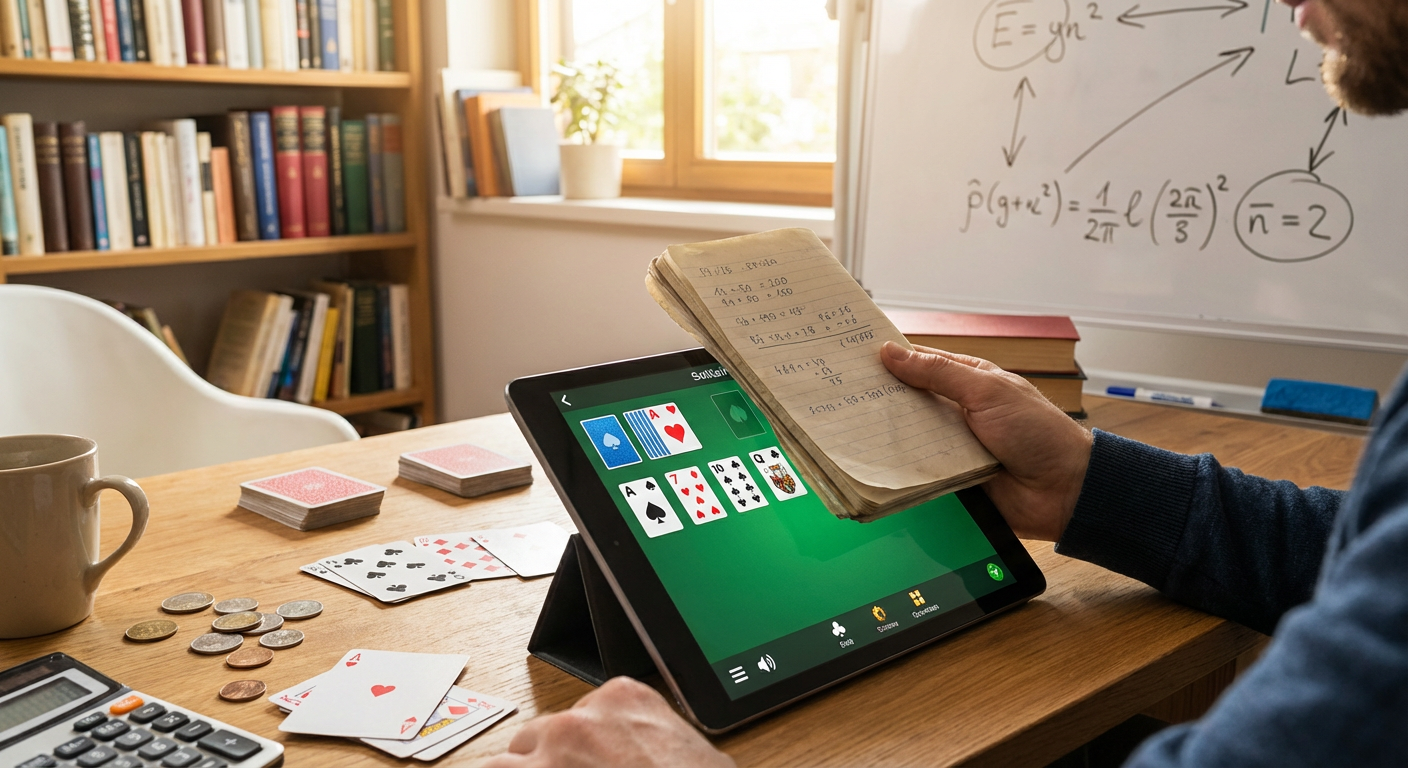
When we look at titles like Papaya Gaming's Solitaire Cash, the brilliance of this systemic architecture becomes obvious. A century-old game played on green felt tables is stripped of its solitary nature and weaponized into a modern digital sport. The algorithm ensures you are never penalized for a bad shuffle; you are simply tested on how brilliantly you navigate the same shuffle as your opponent.
The Invisible Math Keeping Things Even
Building an engaging puzzle is only 10 percent of the battle. The remaining 90 percent involves ensuring that the people playing those puzzles never feel entirely outmatched or completely bored.
This is where dynamic matchmaking algorithms take center stage. Rather than throwing highly experienced puzzle veterans into the same arena as someone playing on their commute for the very first time, the underlying engine constantly calculates an invisible skill rating for every single user. This rating adjusts fluidly based on speed, accuracy, decision-making, and historical win rates.
For independent developers, mastering competitive logic puzzle game design isn't just about creating a fun loop; it is about building trust. Players are uniquely sensitive to perceived unfairness. The moment an audience feels the scales are tipped by artificial pay-to-win mechanics or hidden algorithms designed to force them into losing streaks, they will uninstall the app and never return.
By prioritizing transparent, skill-based matchmaking, developers completely bypass this friction. They tap into an ecosystem where invisible math is making indie game devs rich simply because the math is honest. The monetization model shifts from aggressive ad-spamming to a clean, optional entry-fee system where players fund their own prize pools. Developers take a platform fee for hosting the arena, aligning the financial success of the game entirely with the player's enjoyment of the competition.
Why Developers Are Flocking to the Puzzle Arena
Industry estimates suggest the financial upside for developers entering this space in 2026 is staggering. Mobile players spent over $3 billion on skill-based gaming in the last fiscal year, and that trajectory is aggressively pointing upward. But the true appeal for an indie studio isn't just the sheer volume of capital; it is the accessibility of the development cycle.
You do not need a team of three hundred animators to build a hit logic puzzle. You need a singular, tightly gripping mechanic and a flawless backend architecture.
By using established frameworks and partnering with seasoned publishers who understand the legal and technical nuances of skill-based gaming, a solo developer in a one-bedroom apartment can command the same daily active user base as a massive corporate studio. Platforms that offer publishing partnerships handle the heavy lifting of payment processing, fraud prevention, and matchmaking architecture. This frees the developer to focus exclusively on what they do best: designing incredible puzzles.
The resulting ecosystem is one of the most creatively fertile grounds in modern technology. We are seeing indie teams deconstruct sudoku, reverse-engineer minesweeper, and invent entirely new spatial geometry challenges, all built on the bedrock of fair competition.
Turning Intentional Play Into Tangible Reward
The era of mindless scrolling is drawing to a close. As our daily lives become increasingly automated and curated by artificial intelligence, human beings are actively seeking out digital experiences that require genuine mental friction. We want to unleash our potential through play. We want a venue where our quick thinking and strategic foresight are acknowledged and rewarded.
This makes competitive logic puzzle game design more than just a fleeting industry trend. It represents a fundamental maturation of the mobile gaming medium. It elevates the casual gamer to the status of a competitor and elevates the indie developer to the status of a tournament operator.
The barrier to entry for players is delightfully low—anyone with a smartphone can download these games for free, learn the mechanics in sixty seconds, and jump into practice arenas. But the skill ceiling reaches virtually infinite heights. As long as developers continue to champion fairness, transparency, and intentional play, the simple brain teaser will remain the most powerful, most lucrative, and most engaging arena in the digital world. What hidden symmetries will players uncover next?
FAQ:
Frequently Asked Questions
Ready to turn your game into a competitive tournament?
Partner with Papaya to bring skill-based competition to your players.
Partner with Papaya