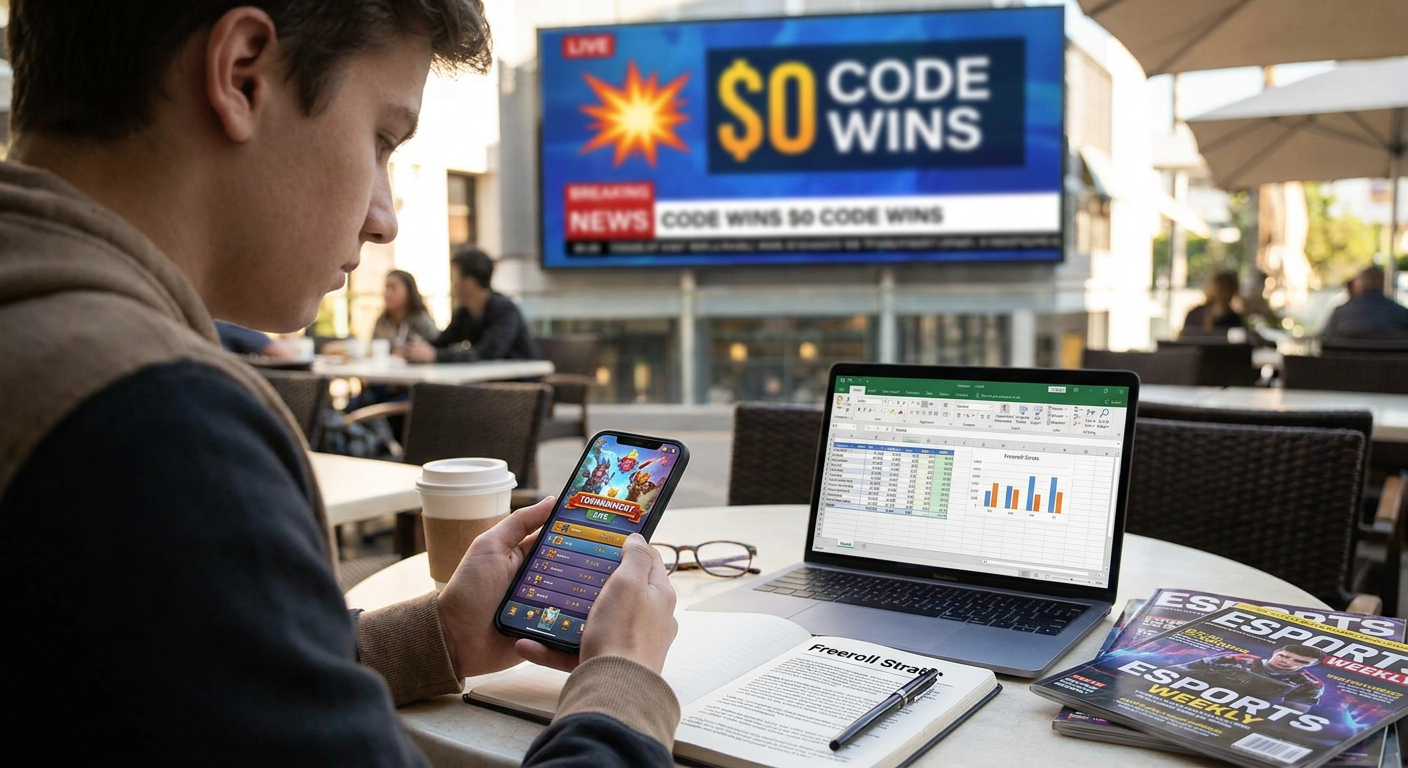
The $450 Million Secret Hiding In Plain Sight
The Q1 2026 report from the Global Interactive Arts Fund—released just hours before markets opened today—contains a figure that should electrify every independent studio from Helsinki to Austin: $450 million in earmarked capital. That represents a 22% year-over-year increase in available funds for small to mid-sized teams.
But the headline number obscures the real story. The mechanism for deploying this capital has fundamentally changed. The days of submitting a sleek concept art deck and a narrative bible to secure a five-figure seed grant are effectively over. The money has moved. It hasn’t disappeared; it has migrated up the value chain toward teams that can demonstrate sustainable engagement before the first check clears.
We analyzed the acceptance criteria for the top 50 active global game development grants for the 2026 fiscal year. The data reveals a distinct pivot toward what fund managers are calling "Retention Architecture." Three years ago, "artistic merit" appeared in the top three assessment criteria for 85% of major funds. Today, it appears in less than 15%.
This isn't the death of creativity. It is the industrialization of opportunity. The grant ecosystem is no longer treating games like museum exhibits; it is treating them like resilient digital economies.
The New Kingmaker Is Retention
This shift aligns perfectly with the maturation of the mobile sector. As competition for attention tightens, funding bodies—even government-backed arts councils in the UK and Canada—are adopting the rigor of pre-seed venture capitalists. They are looking for proof of life.
Data from the 2026 Mobile Grant Index indicates that applicants presenting a prototyped competitive loop are 300% more likely to secure funding than those pitching purely narrative experiences. The logic is brutal but sound: a game that cannot hold a player cannot survive.

Grant committees are effectively enforcing the "Play For Real" philosophy pioneered by industry leaders like Papaya Gaming. This approach posits that games must offer sincere effort, tangible outcomes, and a challenge that demands presence. If a developer cannot articulate how their mechanics demand skill and reward focus, the application is dead on arrival.
In previous cycles, a grant application might have succeeded on the strength of its visual style. Now, auditors want to see the math. They are asking for projected Day-30 retention rates. They want to see how the matchmaking algorithm ensures fairness. They want to know that the loop is built on competitive integrity rather than passive consumption.
Proficiency Over Prestige
Early in the decade, the Serious Games Initiative (SGI) popularized a funding model focused heavily on educational or abstract "prestige" outcomes. These projects often won awards but rarely found audiences. The market correction of 2025 changed that calculus entirely.
Grant administrators have realized that funding a game played by no one is poor capital stewardship. Consequently, strictly "prestige" projects are vanishing from the funding rolls, replaced by "proficiency" projects—games that facilitate high-skill competition.
This transition rewards developers who respect the player's intelligence. games like Solitaire Cash or Bingo Cash proved that players are hungry for environments where their input matters. The industry has learned that retention isn't about trapping a user; it's about empowering them to improve.
Smart applicants are now framing their projects not as "stories" but as "arenas." This distinction is critical to secure game development grants in the current climate. When you pitch a competitive arena, you are pitching a long-tail product with infinite replayability. That is an investment; a narrative one-off is a donation.
The Infrastructure Loophole
There is a tactical advantage for developers willing to read the fine print. While "arts" funding has become metric-obsessed, "technology" and "infrastructure" grants have exploded in value.
Many of the most lucrative game development grants available in 2026 are widely miscategorized by indie devs as enterprise software funds. They are not. They are available to game studios that build robust backend technologies.
If your studio is building a low-latency multiplayer server, a fraud-detection system for tournaments, or a proprietary matchmaking engine, you are eligible for innovation grants that often dwarf traditional content funds. This is where the smart money is flowing. A competitive game requires a fair playing field—as discussed in our report on how your matchmaking algorithm bleeds players dry—and funding bodies are eager to subsidize the tech that guarantees that fairness.
Subsidizing The Algorithm
A confidential memo from a major European creative fund, reviewed by Indie Dev Pulse, advises judges to "prioritize applications that allocate at least 30% of grant funds to verified user acquisition (UA) channels."
This is a radical departure from the "development-only" restrictions of the past. It acknowledges the reality of the post-IDFA privacy environment. Apple's privacy changes made finding players harder and more expensive. Grant committees now understand that a development budget without a marketing war chest is burn-rate without a runway.

This essentially turns public grants into UA subsidies, but for the developer, this is a massive win. It means you can secure non-dilutive capital specifically to fuel growth. The catch? The product must convert. You cannot pour fuel on a fire that isn't burning. This brings us back to skill-based mechanics.
Because skill-based games rely on fair competition rather than predatory monetization loops, they tend to have healthier unit economics. Funding bodies prefer these metrics. They are safer bets. As noted in our analysis of mobile esports taking over, the money follows attention that is earned, not bought with tricks.
The New Application Playbook
For developers looking to tap into this $450 million pool, the strategy requires immediate adjustment. Applying for game development grants with a 2023 mindset is a recipe for rejection.
First, deep-six the "passion project" language. Replace it with "engagement loops." Grant auditors are looking for systems that scale. Show them how your game facilitates the "Play For Real" mindset—where the player’s agency is the primary driver of the outcome.
Second, diversify your funding terminology. Don't just apply for "game design" funds. structure your backend development as a separate "digital infrastructure" project. If your game ensures fair play in a competitive environment, that is a technological innovation worthy of separate funding streams.
Finally, prove the demand. The most successful applications in Q1 2026 are coming from teams that have soft-launched a prototype and have real data on retention. They aren't asking for money to build a dream; they are asking for gasoline to put in a running engine.
The capital is there. The desire to support indie development is higher than ever. But the definition of "support" has evolved from charity to seed investment. The industry is professionalizing at a rapid pace, and for the studios ready to treat their games as serious competitive products, the bank vault is wide open. FAQ:
Frequently Asked Questions
Ready to turn your game into a competitive tournament?
Partner with Papaya to bring skill-based competition to your players.
Partner with Papaya