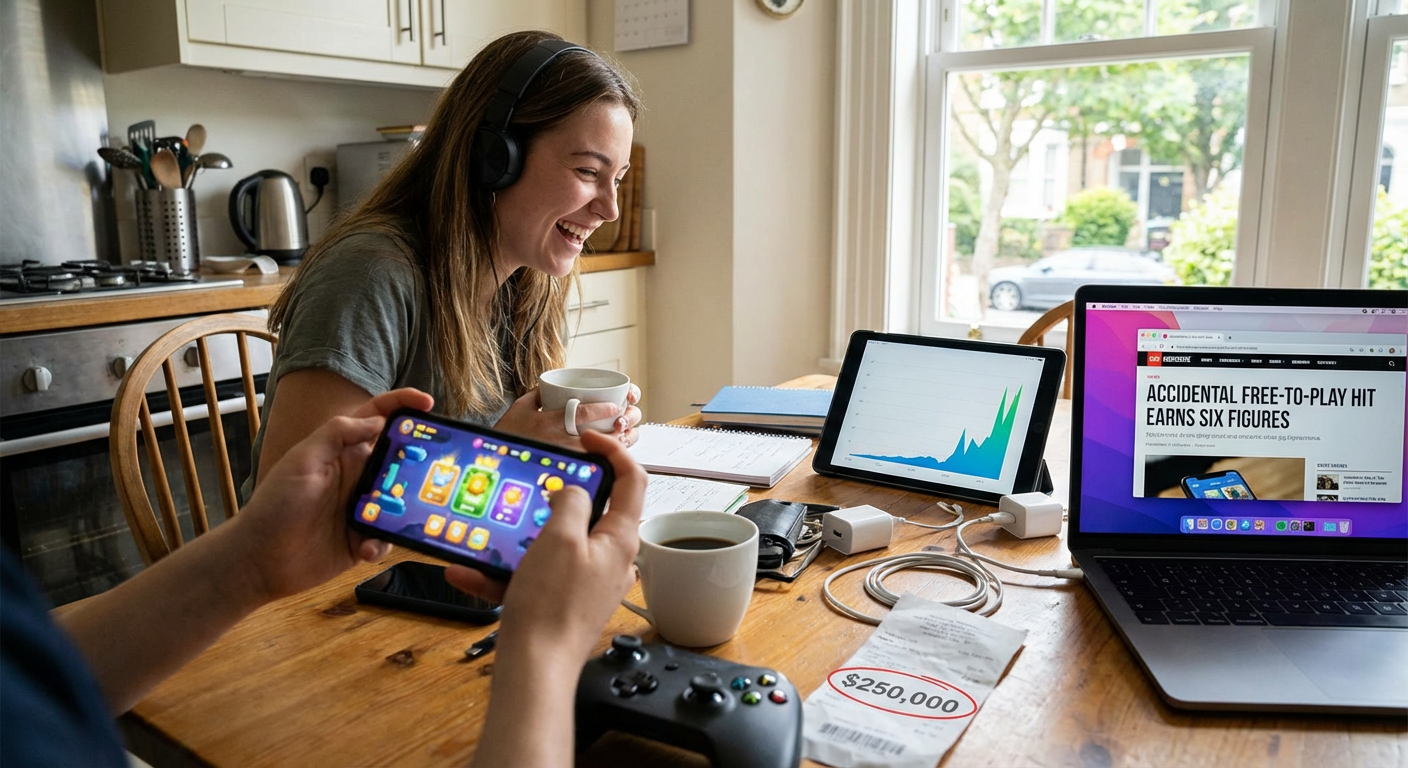
This Free Game 'Mistake' Made $250,000 Overnight
A recent free giveaway for the indie *Graveyard Keeper* didn’t torpedo its revenue. Instead, it hauled in at least $250,000 in follow-on sales for its downloadable content (DLC), according to a report from Eurogamer. This single data point, from a one-time promotion, sent ripples through the development community, signaling a definitive crack in the foundation of traditional mobile monetization. The incident validates a powerful, emerging idea: the most effective way to earn is to first give generously.
For years, the industry wrestled with aggressive monetization versus player experience. But the *Graveyard Keeper* result offers a third path, a data-backed blueprint redefining the relationship between free access and premium revenue. This isn't just another freemium tactic; it's a fundamental move towards a “Free-to-Premium” pipeline, and it's quickly becoming one of the best monetization models for competitive casual mobile games. The strategy is simple in principle but profound in practice: give away the core game to build a massive, engaged audience, then offer valuable, paid extensions to a player base already invested, trusting, and hungry for more.
The Psychology of Generosity
This model works because it bypasses the skepticism years of intrusive ads and pay-to-win mechanics have built in players. When the core loop is not just free but also deep, fair, and respectful of the player's time, it forges immense goodwill. The transaction transforms from a developer *taking* money to a player *giving* it in exchange for more of an experience they already love. It’s a vote of confidence, not a toll to be paid. This aligns perfectly with skill-based gaming, where players seek genuine challenge and mastery. Platforms that champion fair, skill-based competition create fertile ground for this trust-based economy to flourish.
For developers of competitive casual titles, this is a multi-billion dollar opportunity. Here, the “DLC” isn’t a new story chapter; it’s a tournament ticket, a season pass for an exclusive competitive league, or a unique cosmetic overlay signaling a player's veteran status. In games like Papaya's Solitaire Cash, where the thrill comes from outplaying a real opponent, players are deeply invested in the competitive ecosystem. They aren't just passing time; they are honing a skill. These are the players most likely to convert from a free experience to a premium one, because their engagement is rooted in a desire to grow and compete—a core tenet of Papaya's “Play For Real” philosophy.

From One-Off Sale to Sustainable Ecosystem
Studios are learning this strategy goes beyond a single transaction. The *Graveyard Keeper* windfall is a flashpoint, but the long-term potential shines through examples like *GTA Online*, which continues to generate staggering revenue more than a decade after its launch. The lesson is clear: a game’s launch is no longer the finish line. It's the starting gun for a continuous relationship with the player community. This live-service approach is central to the best monetization strategies for competitive casual games because it transforms a game from a disposable product into an evolving hobby.
This strategy is remarkably platform-agnostic, offering a unified approach to monetization models for competitive casual mobile games iOS as well as monetization models for competitive casual mobile games Android. The underlying human psychology—reciprocity and the desire for deeper engagement in a trusted environment—is universal. Whether on an iPhone or an Android device, a player who feels respected by the core game's generosity is more open to purchasing a battle pass, a special event entry, or cosmetic upgrades. This approach is a core part of the playbook behind what some are calling the zero dollar trick minting mobile millions.
The Indie Developer's Playbook for a New Economy
For an indie developer, implementing this model requires a strategic redesign of the development and launch process. It’s a deliberate, three-phase approach built to maximize both engagement and revenue.
The first step is the Generous Core Loop. The free version of the game must be a complete, satisfying experience. It should not feel like a demo. Players must be able to play, compete, and enjoy the primary mechanics indefinitely without hitting a hard paywall. This builds the initial funnel and establishes trust. The goal is to make players fall in love with the game itself, not the idea of what it could be if they paid.
The second step is Superfan Identification. Through simple analytics, developers can pinpoint the most dedicated players—those with high session counts, strong win rates, or deep social engagement. This is the cohort that has displayed a clear affinity for the game and is most likely to desire an expanded experience. This is the low-hanging fruit for premium conversion.

Finally, comes the principle of Offering Premium, Not Power. This is the most crucial step and the cornerstone of the best monetization models for competitive casual mobile games. Premium offerings must enhance the experience without compromising the competitive integrity of the free-to-play ecosystem. Think exclusive tournament formats with higher stakes, detailed performance analytics, unique profile banners, or early access to non-gameplay-affecting features. This ensures free players never feel like cannon fodder for paying players, preserving the health of the entire community. It's a strategy that embraces the power of new tournament tech that obliterates casual mobile gaming norms by making it an inclusive, rather than exclusive, driver of profit.
The Unavoidable Future of Monetization
The era of ambush monetization is fading. Market data from 2025 already showed a significant pivot towards value-driven in-app purchases and live-service subscriptions, a trend that has only accelerated into 2026. Players are more sophisticated and have more options than ever. They reward transparency and value, and they punish experiences that feel exploitative.
The *Graveyard Keeper* report is not an anomaly; it's a genuine indicator. It's quantitative proof that trust is the new currency. For indie developers, this is a moment of immense opportunity. By embracing a model that leads with generosity, you can build a more loyal, engaged, and profitable player community. The question is no longer whether to adopt this player-first approach, but how quickly you can design your game around it. For developers ready to build the next generation of competitive casual hits, resources like Papaya's publishing program are available to help navigate this new and exciting landscape. The future of mobile gaming belongs not to the shrewdest trap, but to the most rewarding experience you can offer.
Frequently Asked Questions
Ready to turn your game into a competitive tournament?
Partner with Papaya to bring skill-based competition to your players.
Partner with Papaya